Feeling Dwarfed (#ThursdayTreeLove)

Ever so often we feel dwarfed when next to some tall structures (monuments, mountains etc) or figuratively when we hear profound thoughts or deeds. Yet another occassion is when faced with monumental trees. Today I want to describe one such.

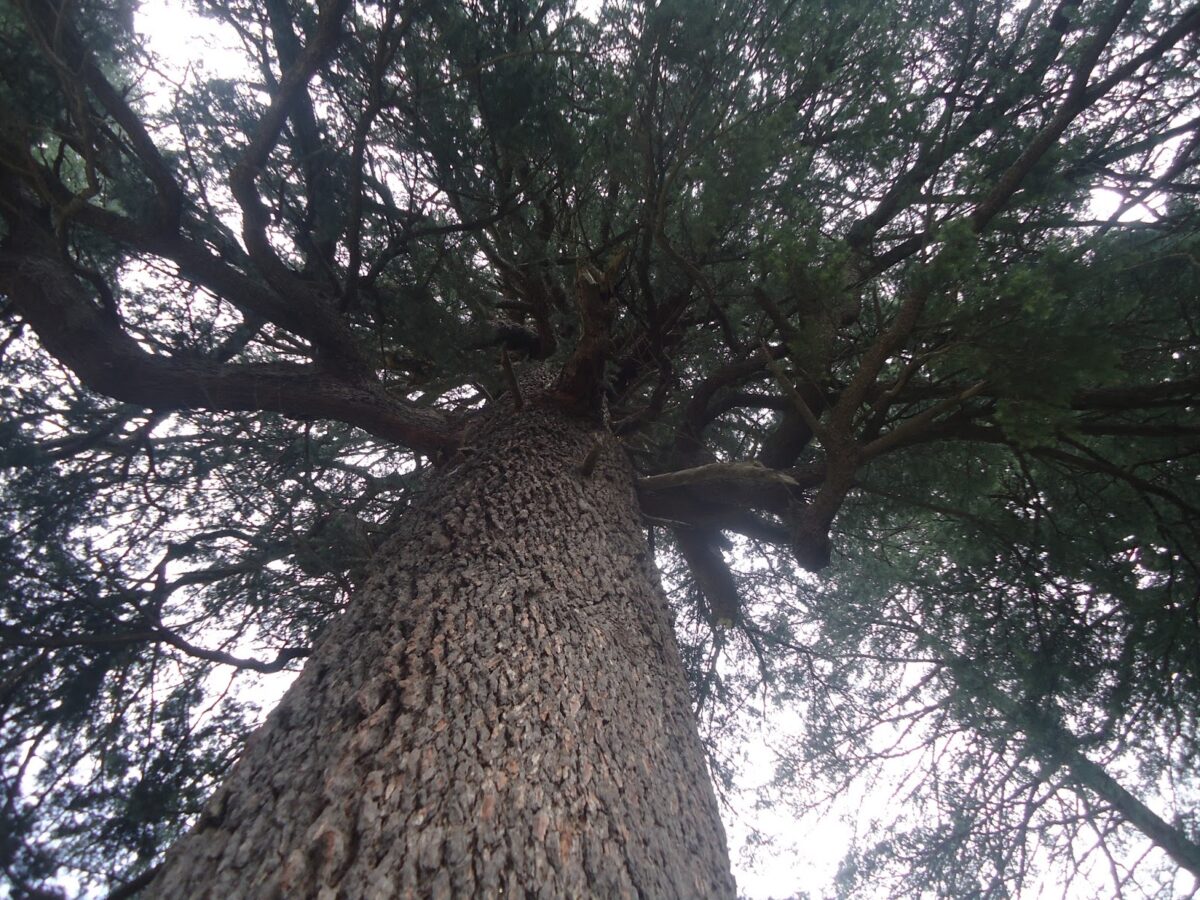
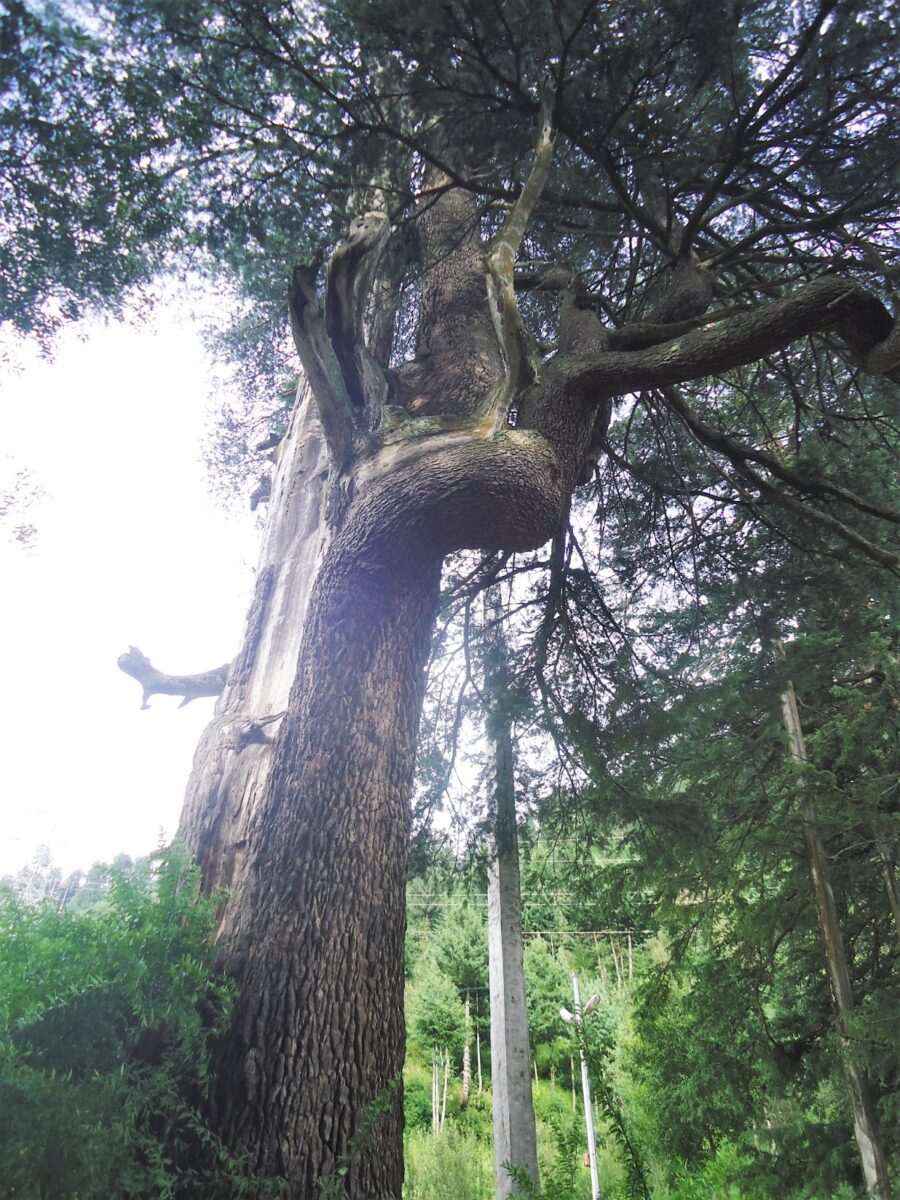
We had seen this one at a temple in Manali and I felt really small standing under it. The view as I looked up is in the image below and I could not see the tree top from where I stood. The branches created a dense mesh of sorts that filtered the sunlight as it reached the ground. 
Cedrus, Pinaceae, Manali, Trees


According to the locals, this is a really old tree, a claim which was supported by its height and girth. The tree is the Devdar which goes by the botanical name Cedrus deodara from the Pinaceae family. The leaves are needle like and the tree bears cones and not regular fruit that we are familiar with. 

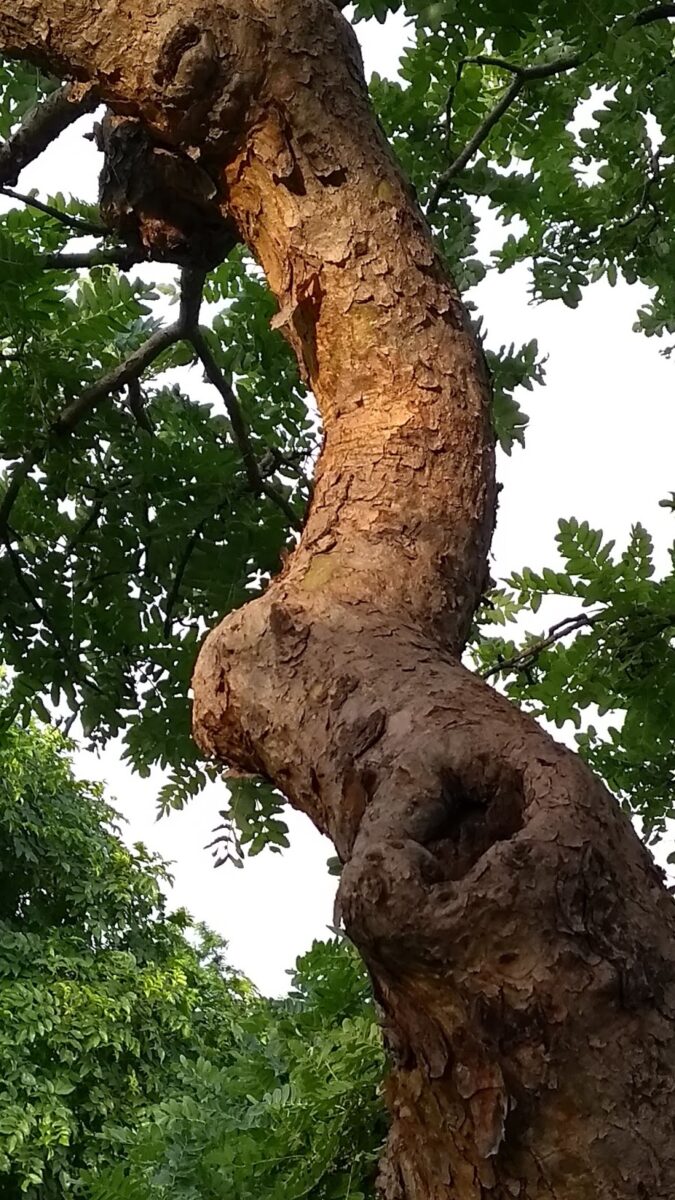
There were several Devdars in Manali and in on the mountain slopes as well. Here is another one that I spotted. Its stem is twisted, I wonder why…..

The species is native to India and commonly found on the slopes of the western Himalayas.


Have you seen the mighty Devdar tree?


I am participating in Parul’s #ThursdayTreeLove28. Head over to see some wonderful trees from around the world.
Falling Stars (#ThursdayTreeLove)

October, Night blooming, Millingtonia

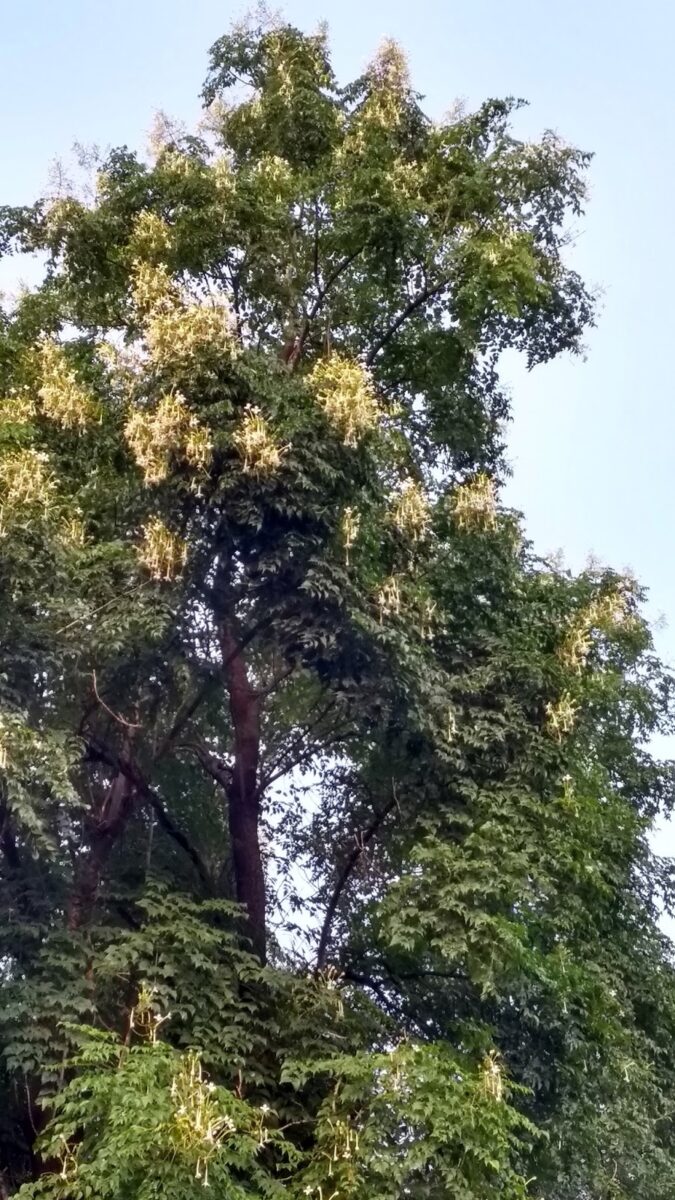
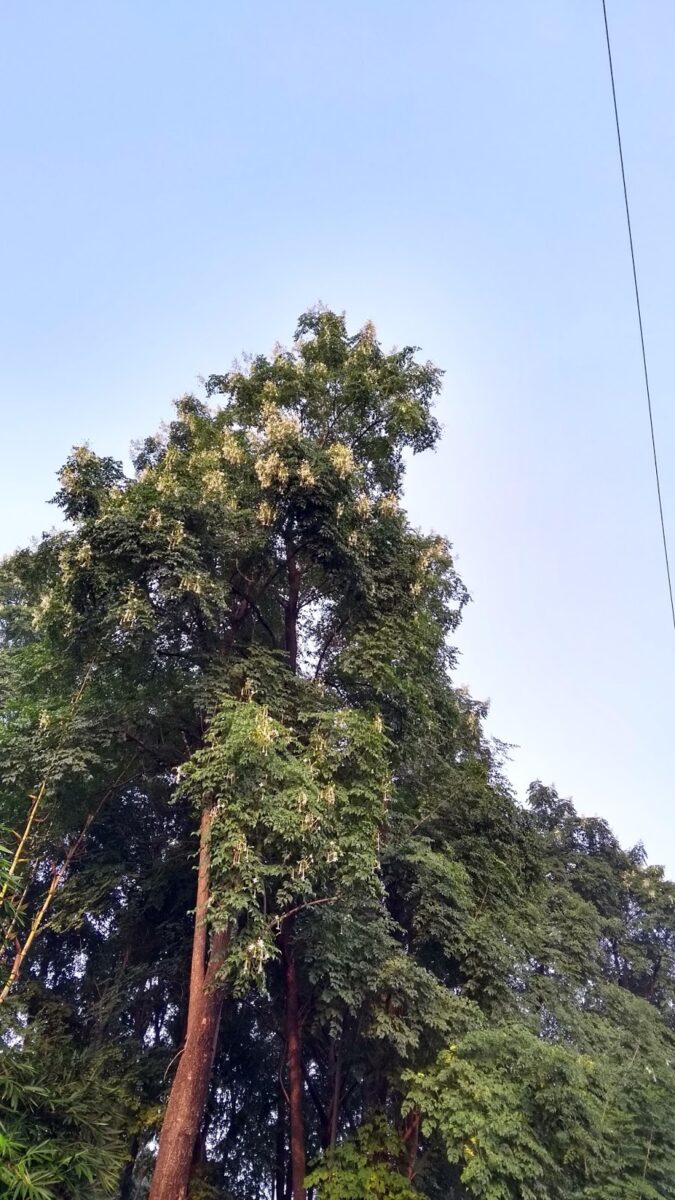
This is the time of year in Pune when the beauty of morning walks is enhanced many fold due to the haunting sweet fragrance of the Indian Cork Tree aka ‘Buccha’ (बु च्च ). The roads are carpeted with waxy tube like flowers every morning which demand us to look up at the tree. I never tire of seeing the inflorescence which looks like falling stars!! Notice the flowers in the accompanying images!! 


Millingtonia, Akash chameli, Pune


Universally known as Millingtonia hortensis of the Bignoniaceae family this tree grows straight up and fairly tall. In fact, it grows in many parts of India so many of you will easily recognise this species if not the name of the tree. The genus Millingtonia is in honour of the English botanist Thomas Millington and Buccha is the only species of the genus.
  
They are night blooming and are at their most fragrant in the night and early mornings. I have not seen fruit formation in my city but I am told that fruits do form in Mumbai – I guess the pollinator insects choose to stay away from here 😉

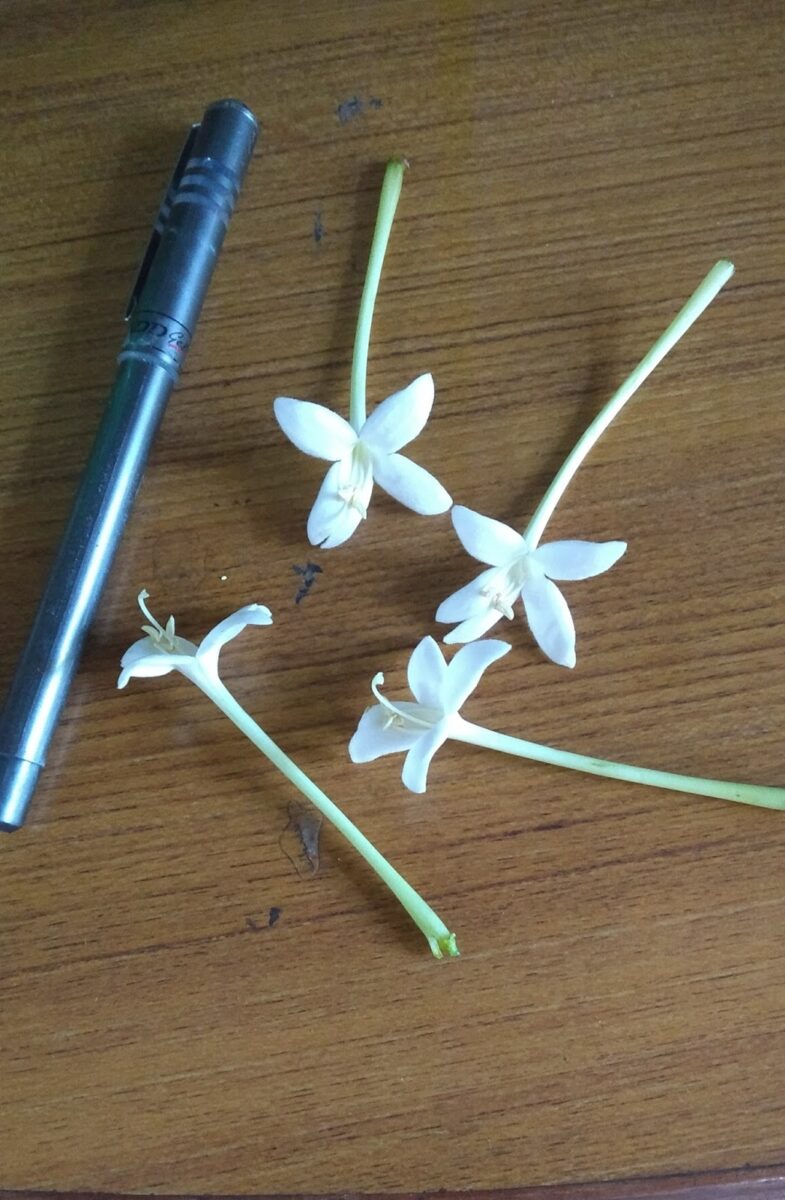
Bell shaped flowers – next to a pen for size comparison

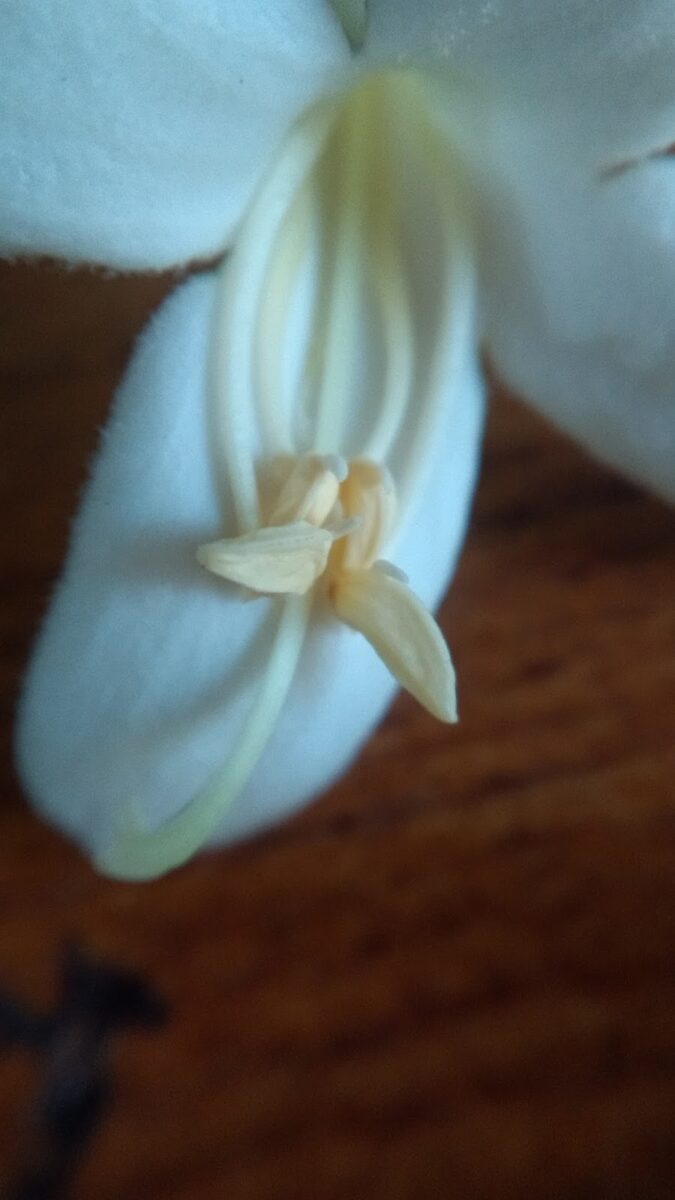
Waxy petals and didynamous stamens which are peculiar to Bignonicaceae family


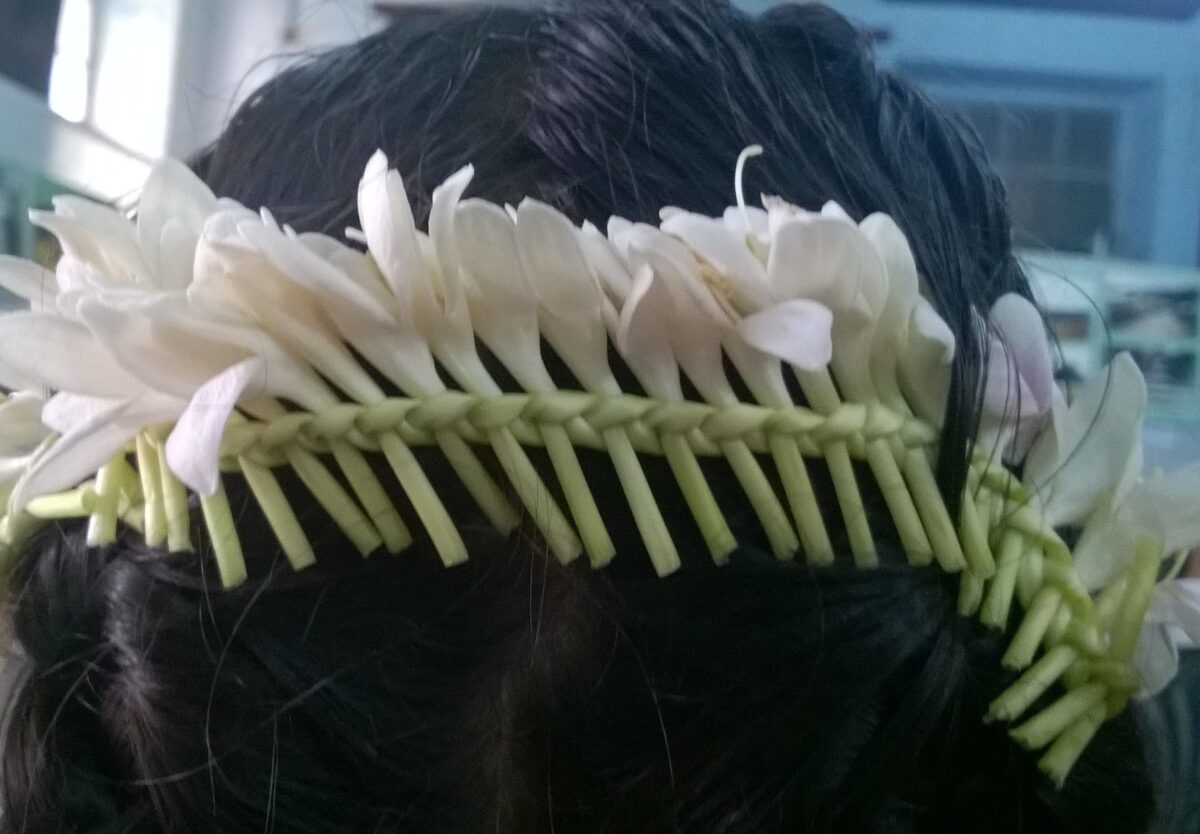
The cream coloured flowers can be braided into a ‘veni’ but mind you this needs some skill and practise. 

Veni is the Marathi word for a braid of flowers that worn to adorn hair.


Buccha often gives out suckers that grow sideways which means ‘baby’ plants can be found to be growing next to the older trees. It is commonly grown as a garden tree and avenue tree as well.

Millingtonia is among my favourite trees one that I never tire of seeing, writing about – I have written about or mentioned in five posts so far 🙂


Have you noticed this tree in your city? 


I am participating in Parul’s #ThursdayTreeLove26. Head over to read about some amazing trees from around the world. 

Update on 2 Nov 2017

Millingtonia leaf


Leaf, compound leaf, millingtonia hortensis
Leaf

Here is an image of the leaf. Leaf can be described as  Bipinnate, leaflets are opposite in 3-5 pairs. Leaflets are ovate, acuminate with rounded base. 

Sleeping (#ThursdayTreeLove)

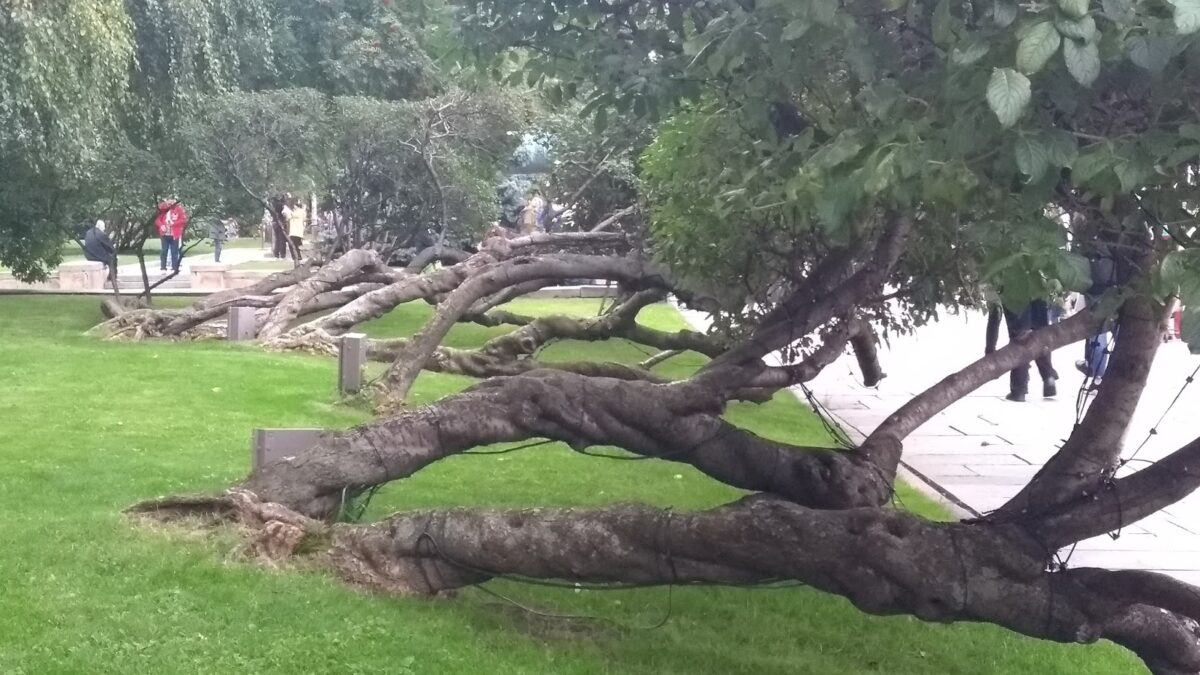
Sleeping, Moscow, Kremlin, Trees


Strange as it sounds these trees do have a ‘sleeping’ habit dont you think?


I came across them in Moscow during our tour of the Kremlin. As yet, I havent been able to ascertain their ID and none of the locals around including our Guide could help me in this respect…


Why must they be horizontal? Flattened in some storm perhaps? Or is it the natural growth style of the species? 


I wonder…. Any ideas folks??


I am participating in Parul’s #ThursdayTreeLove24. Do head over for some fantastic trees from around the world.
Golden (#ThursdayTreeLove)

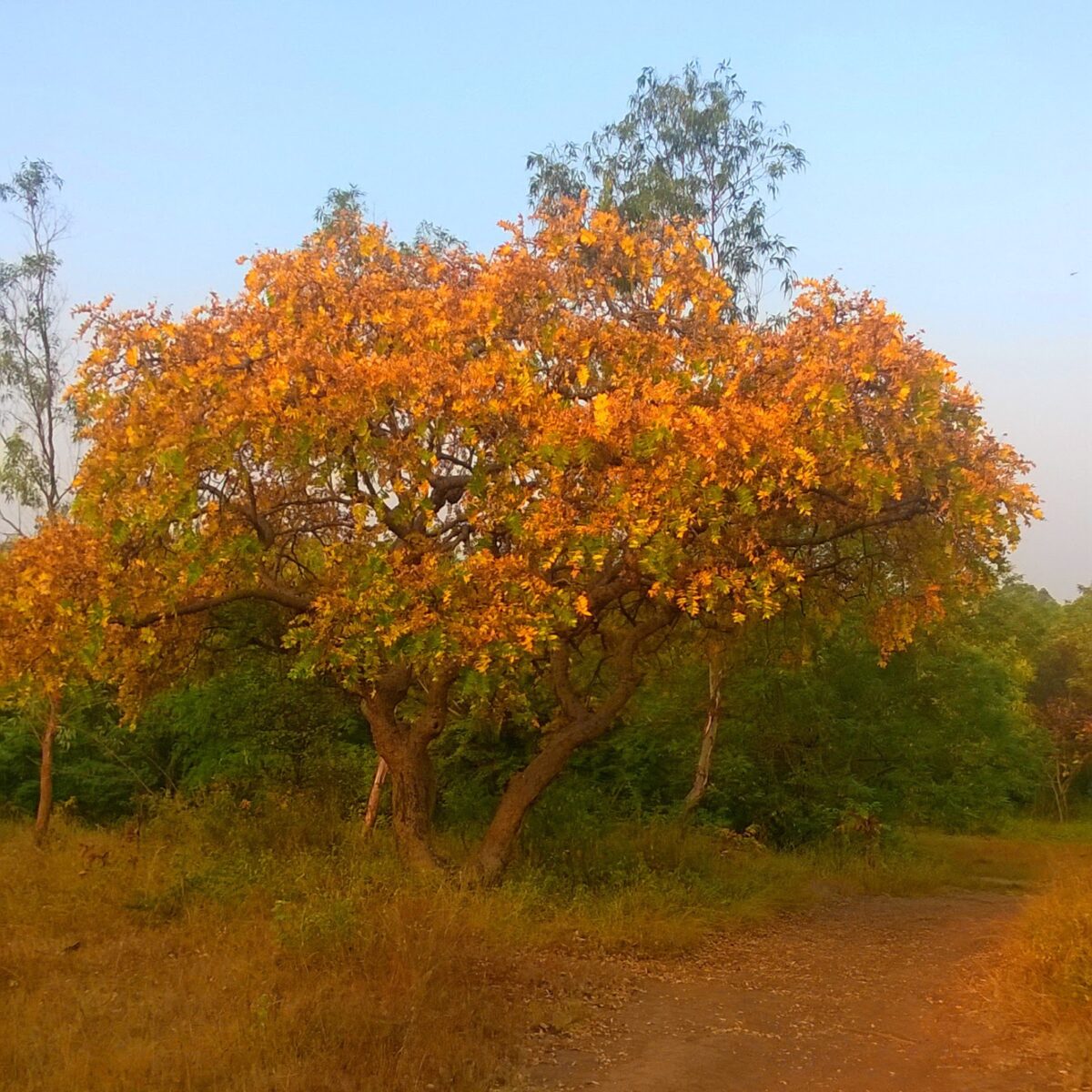
Salai, Pune, Tekdi


This is a Boswellia serrata of the Burseraceae family (locally called Salai). In the above image, the golden glow is due to the morning sunlight on its fading (hence golden yellow) leaves in the autumn. The hills in Pune have many Salai and its easily recognised by its peeling pale coloured bark. It blossoms in January though the flowers are not very conspicuous. The tree exudes an oleo-gum-resin which is said to have medicinal properties, as is the tree bark. 


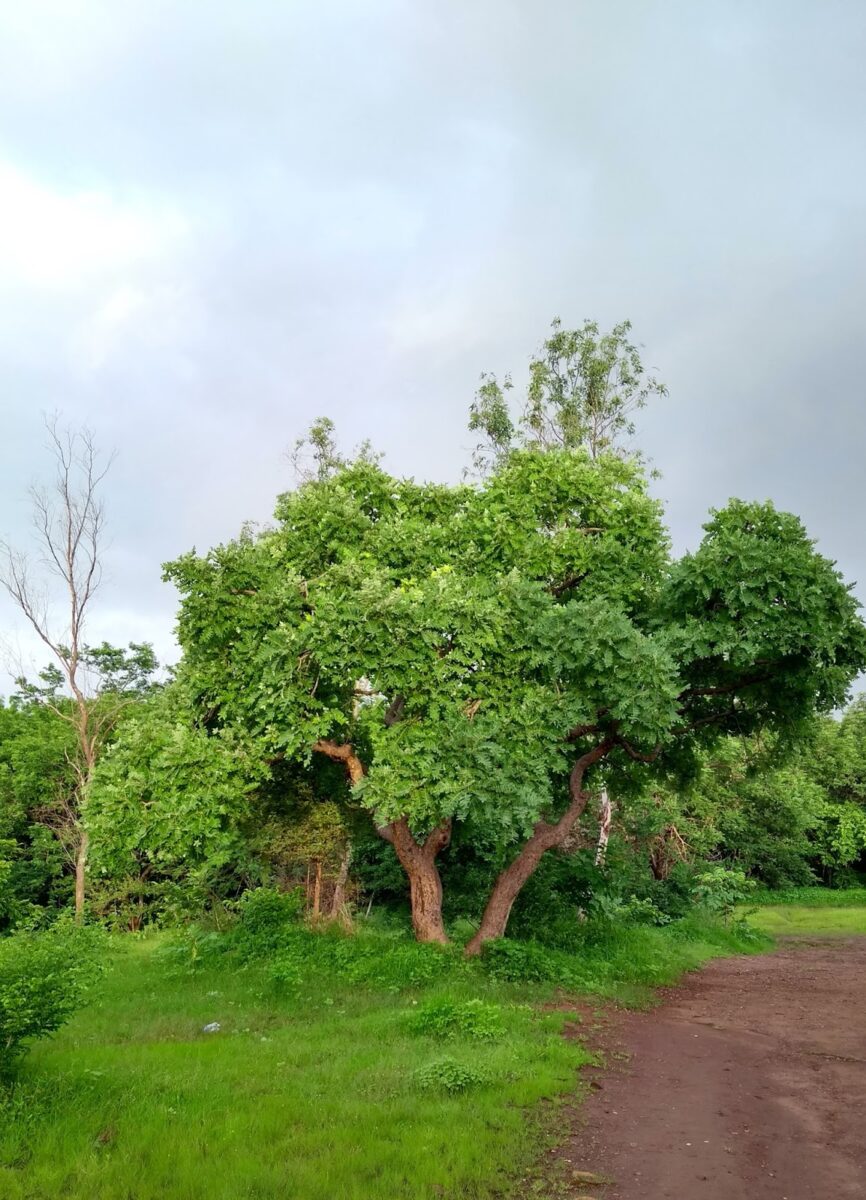
Here is the same tree in the monsoon – isn’t it a glorious transformation?? 

The following image shows the peeling bark. If you can zoom in, its possible to see a greenish layer beneath the yellowish papery peel.


Fall colours in the colder climates are a much sought after touristy delight, one that is high on my wish list. The deciduous trees in my city also display changing leaf colours in the autumn which are just as beautiful.  


Have you noticed leaves turning golden in November every year?


I am participating in Parul’s photo initiative #ThurdayTreeLove. This is my contribution to #ThursdayTreeLove21

Baobab (#ThursdayTreeLove)

Baobab, Wai, Adansonia digitata


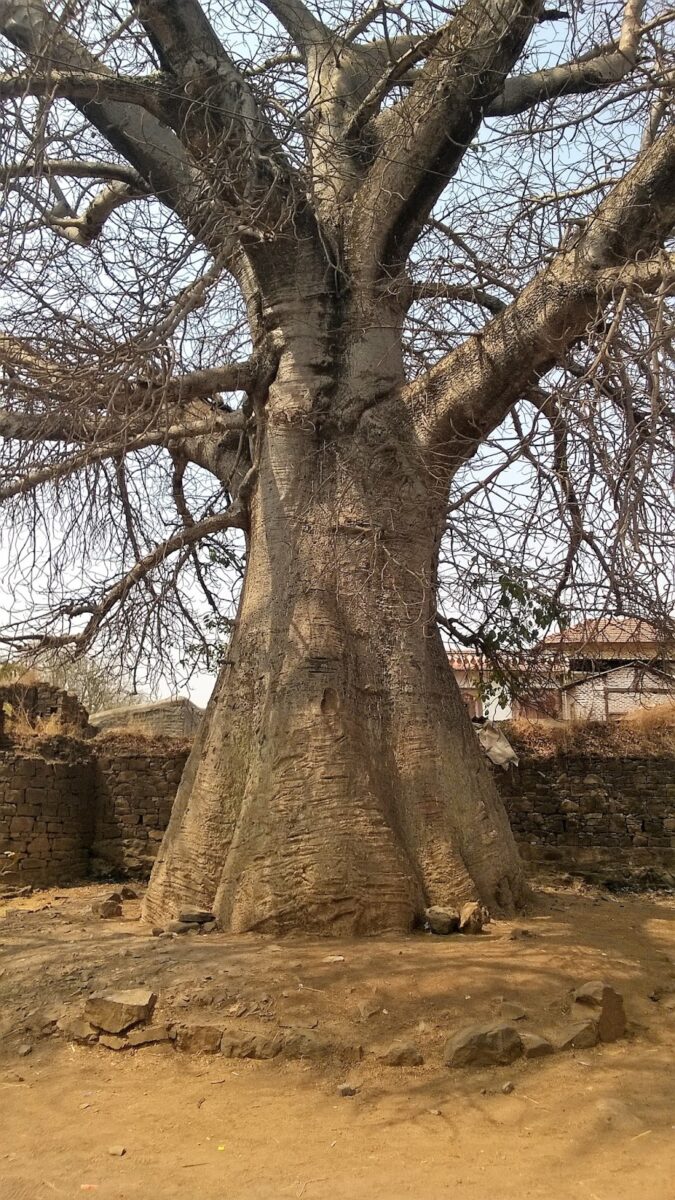
This massive apparently dry tree is none other than the Baobab (Adansonia digitata) of the Bombacaceae family. It simply demanded attention and the three of us holding hands together to form a chain could not completely encircle its girth!  


Its startling feature is a thick trunk and combined with the palmate leaves, identification is fairly simple. The trunk stores water and the tree loses all its leaves during the dry seasons. The flowers are white and bell shaped and bloom at night. They are most likely to be bat-pollinated.  


Baobabs are found in several parts of the world. I have spotted three in Pune but the photo above is from a place called Menavali near Wai in Maharashtra. 

The tree can grow to be really really old and the hollow massive trunk of one such tree in Zimbabwe is said to be able to shelter 40 people! Whoa!! 


In his book ‘Videshi Vruksha’, Prof SD Mahajan mentions a Baobab in Hyderabad that has a diameter of 5 m and is referred to as ‘हाथियों का पेड”. There is grove of several  Baobab trees near Mandu in Madhya Pradesh as well.


In fact, the Baobab finds a mention in the list of Baobab species in the Landmark Trees of India. Though an introduced species in our country, it seems to have flourished here to the extent that it seems like an indigenous species. 


Here is an image of an old Baobab in Pune that grows in the Savitribai Phule Pune University. The tree had collapsed since the trunk was hollowed by some infestion but as you can see, it had not died… The image is not very clear, but it does give a general idea.

Pune, Baobab


Have you seen a Baobab tree? Is there one growing in your city? 


I am participating in Parul’s photo initiative #ThurdayTreeLove. This is my contribution to #ThursdayTreeLove20 

Fallen ( #ThursdayTreeLove)

Sea Mahua , Manilkara littolaris


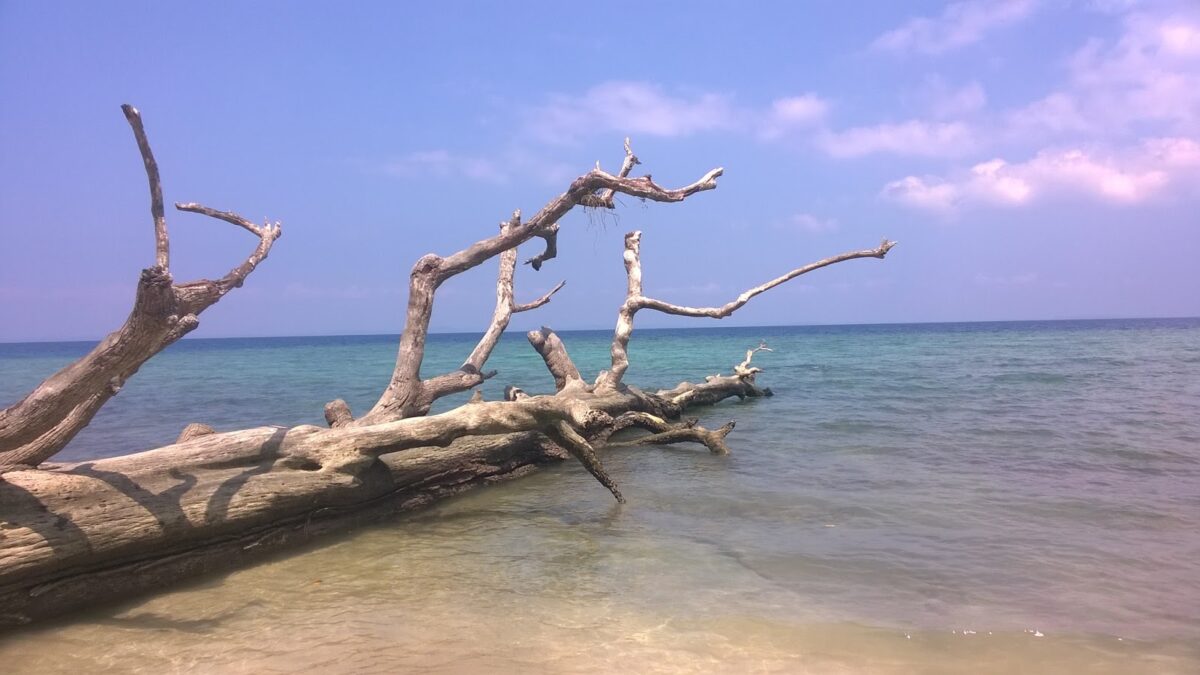
Walking along the almost pristine beach at Elephant Island near Port Blair, my path was blocked by this massive gnarled tree. Its bare whitish bark exuded a strange beauty that competed fiercely with the blue hues of the sea. The thickness and length of its trunk suggested it had seen several summers. While the locals did not seem to know its name, it could have been Manilkara littoralis or the Sea Mohua but this is just a guess…  The beach had several such specimens that I later found, the effects of the Tsunami perhaps?? It continues to awe despite having fallen….


One of the local names of the Sea Mohua is Andaman Bullet Wood. The name Mohua first reminded me of the familiar Mahua and both these belong to the same family Sapotaceae (Chikoo family). 

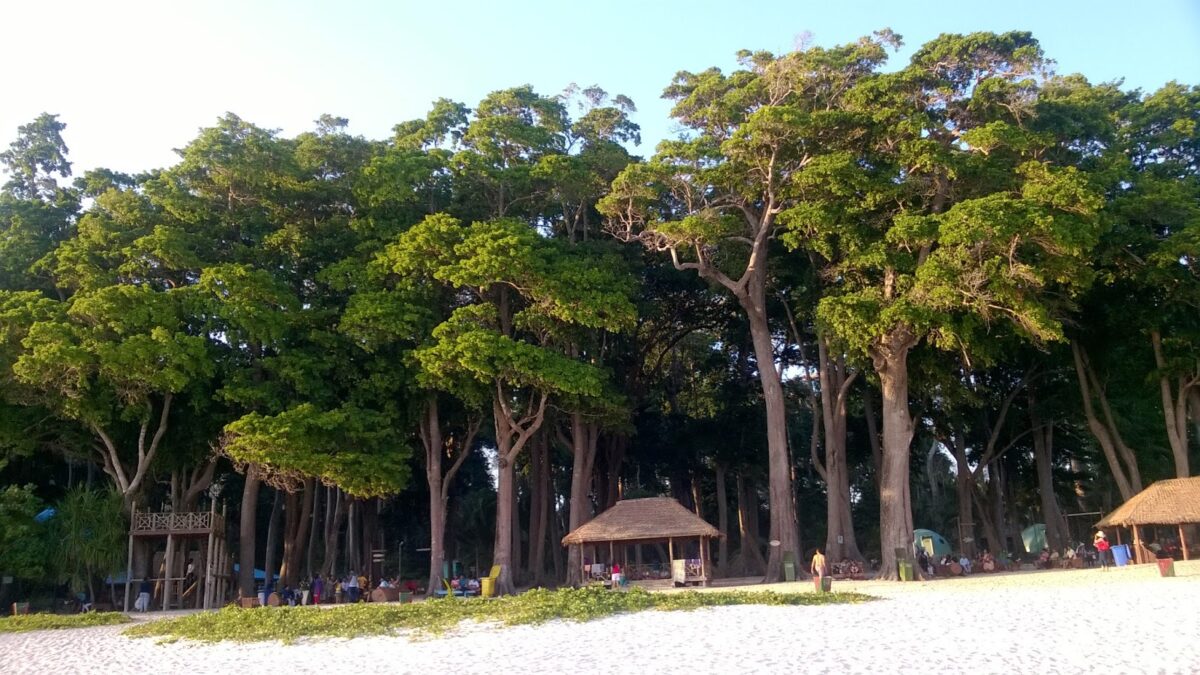
Here is another image of the same tree (trees) on another beach. It gives an idea of how they tower over us!


I am participating in Parul’s photo initiative #ThursdayTreeLove. This is my contribution to #ThursdayTreeLove-19